What Is the Best Way for Veterans to Improve Their Chances of VA Loan Approval?
How do veterans get approved for a VA loan? Learn how VA underwriting evaluates income, credit, and residual income—and how preparation can improve approval chances and avoid delays.
While VA loans are designed to support veterans, approval is never automatic. Understanding how underwriting evaluates a VA loan file is key to improving approval confidence.
The best way to increase the likelihood of a smooth VA loan approval is preparation — not assumption.
Understanding How VA Loans Are Evaluated
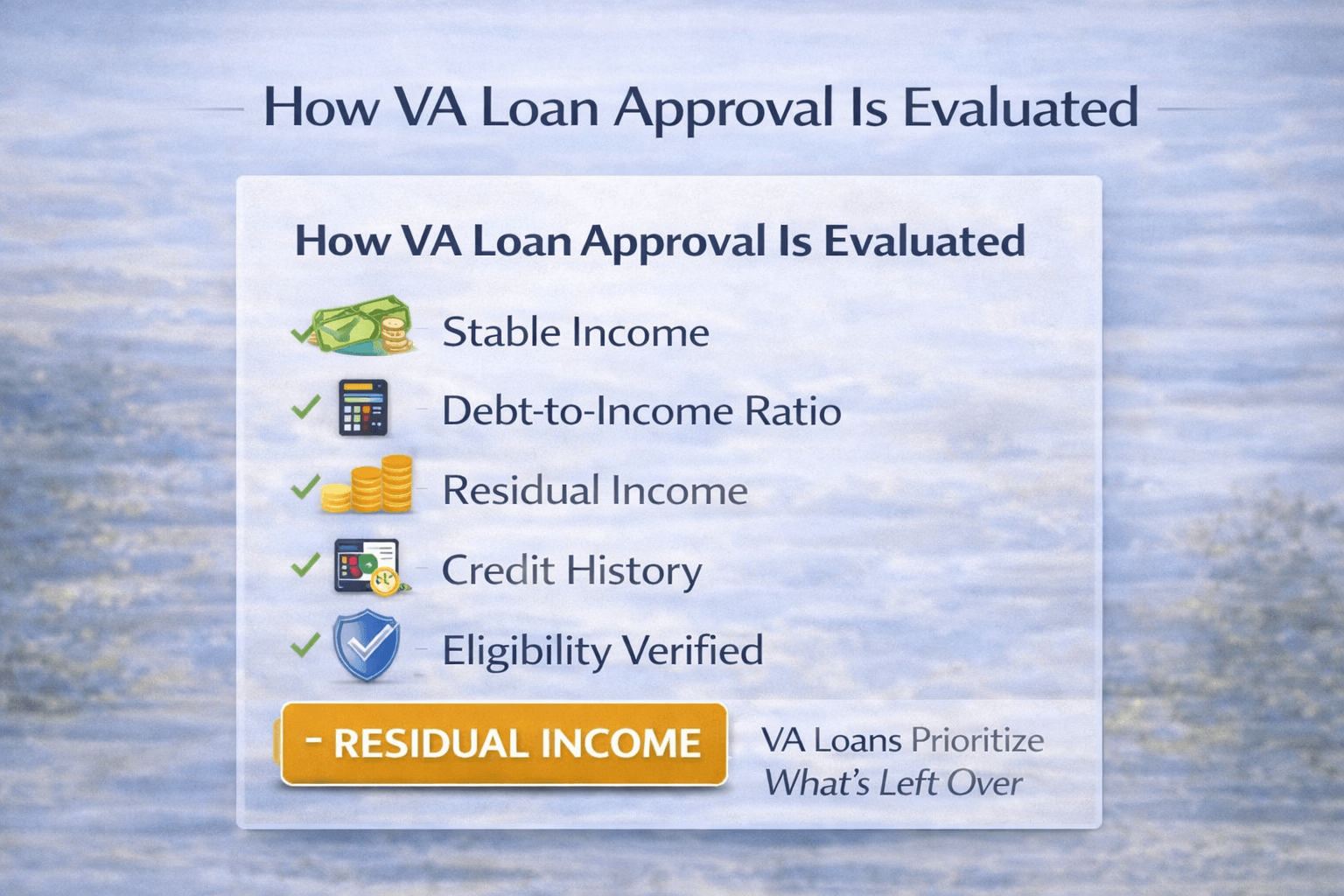
VA underwriting focuses on several core areas:
Stable and qualifying income
Debt-to-income ratio
Residual income requirements
Credit history patterns
Eligibility and entitlement verification
Unlike some other loan types, VA underwriting places strong emphasis on residual income — ensuring borrowers have sufficient funds remaining after major expenses.
Why Early Review Makes a Difference
Many loan complications arise because income or documentation issues are discovered late in the process.
By reviewing income calculations and residual guidelines before submitting to underwriting, potential issues can be addressed proactively.
This approach reduces last-minute documentation requests and improves overall confidence in the file.
Addressing Credit and Debt Strategically
Veterans who are unsure about their readiness should consider:
Reviewing credit reports early
Avoiding major financial changes before closing
Understanding how debt impacts qualification
Creating a clear improvement plan if needed
Not every borrower is ready immediately — but a structured plan can create a clear path forward.
Why Education Strengthens Approval
When borrowers understand:
How underwriting reviews their file
Why documentation is required
What residual income means
…they are better prepared to provide complete and accurate information.
This clarity often leads to smoother approvals and fewer delays.
The best way for veterans to improve their VA loan approval experience is through preparation, documentation accuracy, and upfront evaluation of eligibility and income.
With the right guidance and a proactive approach, veterans can move through underwriting with greater confidence and fewer surprises.