How Much Home Can Veterans Realistically Afford Using a VA Loan?
How much home can veterans afford with a VA loan? Learn how residual income, VA guidelines, and realistic budgeting help veterans buy confidently without overextending financially.
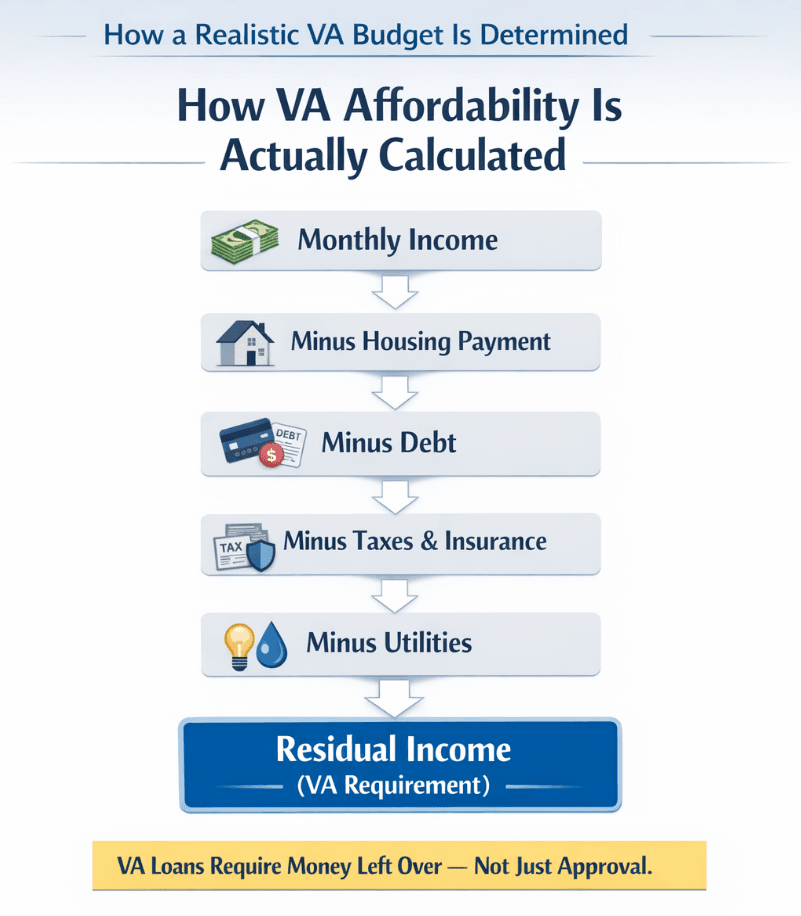
One of the most important questions veterans ask is how much home they can realistically afford. While online calculators provide estimates, they rarely account for VA-specific guidelines that play a major role in affordability.
Understanding how VA loans evaluate affordability helps veterans avoid overextending themselves.
Why VA Affordability Is Different
VA loans evaluate affordability differently than other loan types. In addition to income and debt, VA underwriting considers residual income the amount of money left over after major expenses.
This approach is designed to support sustainable homeownership, not just loan approval.
Common Affordability Mistakes
Veterans often overestimate affordability by:
Relying solely on online calculators
Ignoring residual income requirements
Underestimating ongoing expenses
Not accounting for future lifestyle changes
Without proper guidance, these gaps can lead to uncomfortable payment situations.
How a Realistic VA Budget Is Determined
A realistic VA budget considers:
Stable qualifying income
Existing monthly obligations
Residual income guidelines
Property-related costs
Long-term comfort, not maximum approval
Jason Stier, the VA Loan Boss and founder of Veteran Community Mortgage emphasizes calculating affordability the way an underwriter would before issuing a pre-approval.
Why This Approach Protects Veterans
By identifying affordability limits early, veterans gain clarity and confidence. This reduces the risk of falling in love with a home that doesn’t align with long-term financial comfort.
This proactive approach also strengthens pre-approvals and helps transactions move forward smoothly.
Affordability is about more than what a borrower qualifies for on paper. For veterans using VA loans, it’s about creating a sustainable plan that supports both homeownership and financial stability.
Veterans who take the time to understand this upfront are better positioned for success.